Africa Market EntryHow to expand a business into Africa
Build an expansion plan that respects different market, regulatory and operating realities.
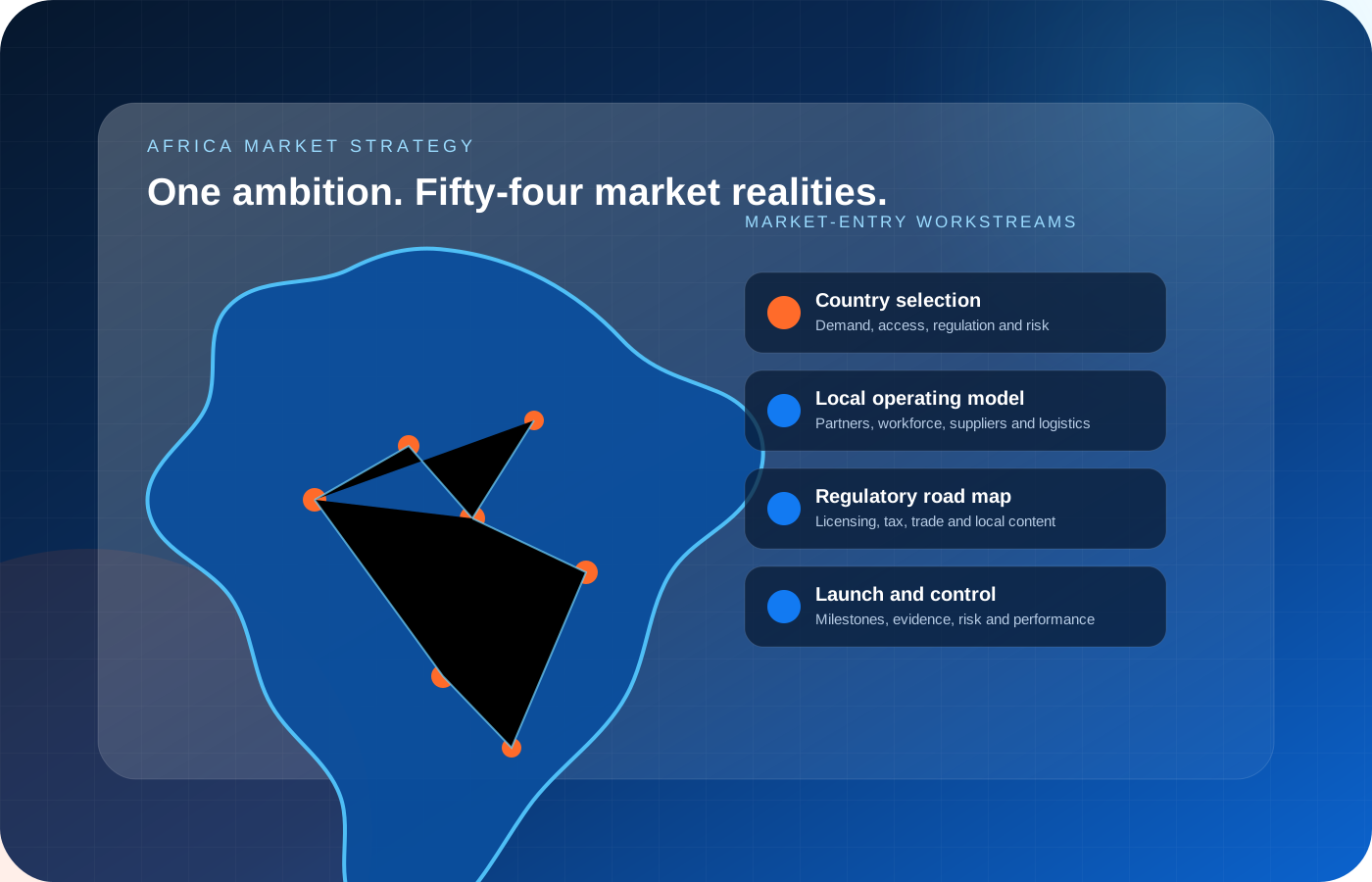
African expansion requires country-specific choices across regulation, partners, local content, trade, workforce, logistics and risk.
A practical framework
- Define the country and regional objective. Translate the principle into a specific decision, action, owner and evidence requirement.
- Compare market realities. Translate the principle into a specific decision, action, owner and evidence requirement.
- Design the local operating model. Translate the principle into a specific decision, action, owner and evidence requirement.
- Control regulation, trade and risk. Translate the principle into a specific decision, action, owner and evidence requirement.
- Launch through measurable milestones. Translate the principle into a specific decision, action, owner and evidence requirement.
Questions to ask before acting
- What outcome are we trying to achieve, and how will success be recognised?
- Which assumptions are supported by evidence, and which still need to be tested?
- What resources, responsibilities, dependencies and risks shape the decision?
- What should happen first, and what should not happen yet?
- When will the plan be reviewed and adapted?
How Identic Core Agent helps
Identic Core Agent helps organise the objective, current position, options, risks, actions, milestones and review points in one connected strategy environment. It can strengthen structure and continuity, while final decisions remain with the individual, executive, organisation or authorised professional responsible for the outcome.
Next move: Use the Strategy Architect to convert this topic into a road map built around your context and objective.
Turn This Insight Into a PlanAfrica Market EntryKey considerations before entering African markets
Evaluate regulation, infrastructure, partners, currency, logistics, local content and risk.
African expansion requires country-specific choices across regulation, partners, local content, trade, workforce, logistics and risk.
A practical framework
- Define the country and regional objective. Translate the principle into a specific decision, action, owner and evidence requirement.
- Compare market realities. Translate the principle into a specific decision, action, owner and evidence requirement.
- Design the local operating model. Translate the principle into a specific decision, action, owner and evidence requirement.
- Control regulation, trade and risk. Translate the principle into a specific decision, action, owner and evidence requirement.
- Launch through measurable milestones. Translate the principle into a specific decision, action, owner and evidence requirement.
Questions to ask before acting
- What outcome are we trying to achieve, and how will success be recognised?
- Which assumptions are supported by evidence, and which still need to be tested?
- What resources, responsibilities, dependencies and risks shape the decision?
- What should happen first, and what should not happen yet?
- When will the plan be reviewed and adapted?
How Identic Core Agent helps
Identic Core Agent helps organise the objective, current position, options, risks, actions, milestones and review points in one connected strategy environment. It can strengthen structure and continuity, while final decisions remain with the individual, executive, organisation or authorised professional responsible for the outcome.
Next move: Use the Strategy Architect to convert this topic into a road map built around your context and objective.
Turn This Insight Into a PlanAfrica Market EntryAfCFTA opportunities for growing companies
Assess trade opportunity alongside rules of origin, evidence, routes to market and operations.
African expansion requires country-specific choices across regulation, partners, local content, trade, workforce, logistics and risk.
A practical framework
- Define the country and regional objective. Translate the principle into a specific decision, action, owner and evidence requirement.
- Compare market realities. Translate the principle into a specific decision, action, owner and evidence requirement.
- Design the local operating model. Translate the principle into a specific decision, action, owner and evidence requirement.
- Control regulation, trade and risk. Translate the principle into a specific decision, action, owner and evidence requirement.
- Launch through measurable milestones. Translate the principle into a specific decision, action, owner and evidence requirement.
Questions to ask before acting
- What outcome are we trying to achieve, and how will success be recognised?
- Which assumptions are supported by evidence, and which still need to be tested?
- What resources, responsibilities, dependencies and risks shape the decision?
- What should happen first, and what should not happen yet?
- When will the plan be reviewed and adapted?
How Identic Core Agent helps
Identic Core Agent helps organise the objective, current position, options, risks, actions, milestones and review points in one connected strategy environment. It can strengthen structure and continuity, while final decisions remain with the individual, executive, organisation or authorised professional responsible for the outcome.
Next move: Use the Strategy Architect to convert this topic into a road map built around your context and objective.
Turn This Insight Into a PlanAfrica Market EntryHow to select the right African market
Use a decision framework to compare opportunity, access, capability and risk.
African expansion requires country-specific choices across regulation, partners, local content, trade, workforce, logistics and risk.
A practical framework
- Define the country and regional objective. Translate the principle into a specific decision, action, owner and evidence requirement.
- Compare market realities. Translate the principle into a specific decision, action, owner and evidence requirement.
- Design the local operating model. Translate the principle into a specific decision, action, owner and evidence requirement.
- Control regulation, trade and risk. Translate the principle into a specific decision, action, owner and evidence requirement.
- Launch through measurable milestones. Translate the principle into a specific decision, action, owner and evidence requirement.
Questions to ask before acting
- What outcome are we trying to achieve, and how will success be recognised?
- Which assumptions are supported by evidence, and which still need to be tested?
- What resources, responsibilities, dependencies and risks shape the decision?
- What should happen first, and what should not happen yet?
- When will the plan be reviewed and adapted?
How Identic Core Agent helps
Identic Core Agent helps organise the objective, current position, options, risks, actions, milestones and review points in one connected strategy environment. It can strengthen structure and continuity, while final decisions remain with the individual, executive, organisation or authorised professional responsible for the outcome.
Next move: Use the Strategy Architect to convert this topic into a road map built around your context and objective.
Turn This Insight Into a PlanAfrica Market EntryLocal-content strategy for international companies
Turn local-content obligations into a practical workforce, supplier and capability plan.
African expansion requires country-specific choices across regulation, partners, local content, trade, workforce, logistics and risk.
A practical framework
- Define the country and regional objective. Translate the principle into a specific decision, action, owner and evidence requirement.
- Compare market realities. Translate the principle into a specific decision, action, owner and evidence requirement.
- Design the local operating model. Translate the principle into a specific decision, action, owner and evidence requirement.
- Control regulation, trade and risk. Translate the principle into a specific decision, action, owner and evidence requirement.
- Launch through measurable milestones. Translate the principle into a specific decision, action, owner and evidence requirement.
Questions to ask before acting
- What outcome are we trying to achieve, and how will success be recognised?
- Which assumptions are supported by evidence, and which still need to be tested?
- What resources, responsibilities, dependencies and risks shape the decision?
- What should happen first, and what should not happen yet?
- When will the plan be reviewed and adapted?
How Identic Core Agent helps
Identic Core Agent helps organise the objective, current position, options, risks, actions, milestones and review points in one connected strategy environment. It can strengthen structure and continuity, while final decisions remain with the individual, executive, organisation or authorised professional responsible for the outcome.
Next move: Use the Strategy Architect to convert this topic into a road map built around your context and objective.
Turn This Insight Into a PlanAfrica Market EntryHow to build regional supply chains in Africa
Connect suppliers, inventory, customs, transport, warehousing, data and resilience.
African expansion requires country-specific choices across regulation, partners, local content, trade, workforce, logistics and risk.
A practical framework
- Define the country and regional objective. Translate the principle into a specific decision, action, owner and evidence requirement.
- Compare market realities. Translate the principle into a specific decision, action, owner and evidence requirement.
- Design the local operating model. Translate the principle into a specific decision, action, owner and evidence requirement.
- Control regulation, trade and risk. Translate the principle into a specific decision, action, owner and evidence requirement.
- Launch through measurable milestones. Translate the principle into a specific decision, action, owner and evidence requirement.
Questions to ask before acting
- What outcome are we trying to achieve, and how will success be recognised?
- Which assumptions are supported by evidence, and which still need to be tested?
- What resources, responsibilities, dependencies and risks shape the decision?
- What should happen first, and what should not happen yet?
- When will the plan be reviewed and adapted?
How Identic Core Agent helps
Identic Core Agent helps organise the objective, current position, options, risks, actions, milestones and review points in one connected strategy environment. It can strengthen structure and continuity, while final decisions remain with the individual, executive, organisation or authorised professional responsible for the outcome.
Next move: Use the Strategy Architect to convert this topic into a road map built around your context and objective.
Turn This Insight Into a Plan