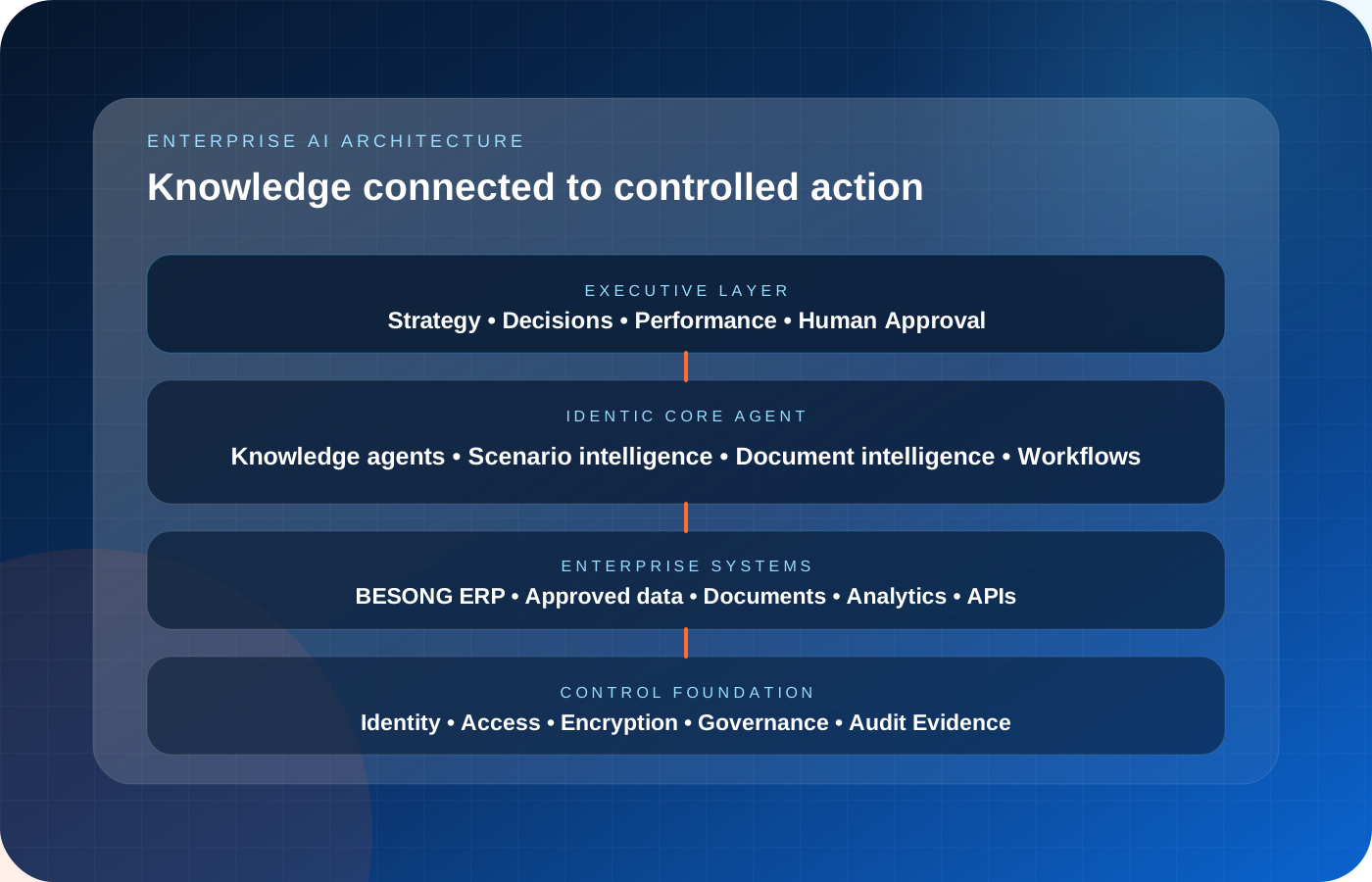
Enterprise AIHow to develop an enterprise AI strategy
Begin with measurable value, approved information, governance, integration and human authority.
Enterprise AI should begin with a decision or operating outcome, then connect approved information, governance, workflows and human authority.
A practical framework
- Define measurable value. Translate the principle into a specific decision, action, owner and evidence requirement.
- Identify approved information and users. Translate the principle into a specific decision, action, owner and evidence requirement.
- Design governance and human authority. Translate the principle into a specific decision, action, owner and evidence requirement.
- Integrate workflows and systems. Translate the principle into a specific decision, action, owner and evidence requirement.
- Monitor performance, risk and evidence. Translate the principle into a specific decision, action, owner and evidence requirement.
Questions to ask before acting
- What outcome are we trying to achieve, and how will success be recognised?
- Which assumptions are supported by evidence, and which still need to be tested?
- What resources, responsibilities, dependencies and risks shape the decision?
- What should happen first, and what should not happen yet?
- When will the plan be reviewed and adapted?
How Identic Core Agent helps
Identic Core Agent helps organise the objective, current position, options, risks, actions, milestones and review points in one connected strategy environment. It can strengthen structure and continuity, while final decisions remain with the individual, executive, organisation or authorised professional responsible for the outcome.
Next move: Use the Strategy Architect to convert this topic into a road map built around your context and objective.
Turn This Insight Into a PlanEnterprise AIWhat an AI knowledge agent can do for organisations
Improve access to approved policies, procedures, contracts, reports and institutional knowledge.
Enterprise AI should begin with a decision or operating outcome, then connect approved information, governance, workflows and human authority.
A practical framework
- Define measurable value. Translate the principle into a specific decision, action, owner and evidence requirement.
- Identify approved information and users. Translate the principle into a specific decision, action, owner and evidence requirement.
- Design governance and human authority. Translate the principle into a specific decision, action, owner and evidence requirement.
- Integrate workflows and systems. Translate the principle into a specific decision, action, owner and evidence requirement.
- Monitor performance, risk and evidence. Translate the principle into a specific decision, action, owner and evidence requirement.
Questions to ask before acting
- What outcome are we trying to achieve, and how will success be recognised?
- Which assumptions are supported by evidence, and which still need to be tested?
- What resources, responsibilities, dependencies and risks shape the decision?
- What should happen first, and what should not happen yet?
- When will the plan be reviewed and adapted?
How Identic Core Agent helps
Identic Core Agent helps organise the objective, current position, options, risks, actions, milestones and review points in one connected strategy environment. It can strengthen structure and continuity, while final decisions remain with the individual, executive, organisation or authorised professional responsible for the outcome.
Next move: Use the Strategy Architect to convert this topic into a road map built around your context and objective.
Turn This Insight Into a PlanEnterprise AIHow responsible AI governance should work
Define authority, permitted use, access, review, evidence, escalation and accountability.
Enterprise AI should begin with a decision or operating outcome, then connect approved information, governance, workflows and human authority.
A practical framework
- Define measurable value. Translate the principle into a specific decision, action, owner and evidence requirement.
- Identify approved information and users. Translate the principle into a specific decision, action, owner and evidence requirement.
- Design governance and human authority. Translate the principle into a specific decision, action, owner and evidence requirement.
- Integrate workflows and systems. Translate the principle into a specific decision, action, owner and evidence requirement.
- Monitor performance, risk and evidence. Translate the principle into a specific decision, action, owner and evidence requirement.
Questions to ask before acting
- What outcome are we trying to achieve, and how will success be recognised?
- Which assumptions are supported by evidence, and which still need to be tested?
- What resources, responsibilities, dependencies and risks shape the decision?
- What should happen first, and what should not happen yet?
- When will the plan be reviewed and adapted?
How Identic Core Agent helps
Identic Core Agent helps organise the objective, current position, options, risks, actions, milestones and review points in one connected strategy environment. It can strengthen structure and continuity, while final decisions remain with the individual, executive, organisation or authorised professional responsible for the outcome.
Next move: Use the Strategy Architect to convert this topic into a road map built around your context and objective.
Turn This Insight Into a PlanEnterprise AIHow AI can support executive decisions
Structure evidence, assumptions, scenarios and action tracking without replacing leadership.
Enterprise AI should begin with a decision or operating outcome, then connect approved information, governance, workflows and human authority.
A practical framework
- Define measurable value. Translate the principle into a specific decision, action, owner and evidence requirement.
- Identify approved information and users. Translate the principle into a specific decision, action, owner and evidence requirement.
- Design governance and human authority. Translate the principle into a specific decision, action, owner and evidence requirement.
- Integrate workflows and systems. Translate the principle into a specific decision, action, owner and evidence requirement.
- Monitor performance, risk and evidence. Translate the principle into a specific decision, action, owner and evidence requirement.
Questions to ask before acting
- What outcome are we trying to achieve, and how will success be recognised?
- Which assumptions are supported by evidence, and which still need to be tested?
- What resources, responsibilities, dependencies and risks shape the decision?
- What should happen first, and what should not happen yet?
- When will the plan be reviewed and adapted?
How Identic Core Agent helps
Identic Core Agent helps organise the objective, current position, options, risks, actions, milestones and review points in one connected strategy environment. It can strengthen structure and continuity, while final decisions remain with the individual, executive, organisation or authorised professional responsible for the outcome.
Next move: Use the Strategy Architect to convert this topic into a road map built around your context and objective.
Turn This Insight Into a PlanEnterprise AIWhy human approval remains essential in enterprise AI
Accountable people must retain authority over significant recommendations and actions.
Enterprise AI should begin with a decision or operating outcome, then connect approved information, governance, workflows and human authority.
A practical framework
- Define measurable value. Translate the principle into a specific decision, action, owner and evidence requirement.
- Identify approved information and users. Translate the principle into a specific decision, action, owner and evidence requirement.
- Design governance and human authority. Translate the principle into a specific decision, action, owner and evidence requirement.
- Integrate workflows and systems. Translate the principle into a specific decision, action, owner and evidence requirement.
- Monitor performance, risk and evidence. Translate the principle into a specific decision, action, owner and evidence requirement.
Questions to ask before acting
- What outcome are we trying to achieve, and how will success be recognised?
- Which assumptions are supported by evidence, and which still need to be tested?
- What resources, responsibilities, dependencies and risks shape the decision?
- What should happen first, and what should not happen yet?
- When will the plan be reviewed and adapted?
How Identic Core Agent helps
Identic Core Agent helps organise the objective, current position, options, risks, actions, milestones and review points in one connected strategy environment. It can strengthen structure and continuity, while final decisions remain with the individual, executive, organisation or authorised professional responsible for the outcome.
Next move: Use the Strategy Architect to convert this topic into a road map built around your context and objective.
Turn This Insight Into a PlanEnterprise AIHow to connect AI strategy with ERP implementation
Link strategic objectives to enterprise data, workflows, controls and performance evidence.
Enterprise AI should begin with a decision or operating outcome, then connect approved information, governance, workflows and human authority.
A practical framework
- Define measurable value. Translate the principle into a specific decision, action, owner and evidence requirement.
- Identify approved information and users. Translate the principle into a specific decision, action, owner and evidence requirement.
- Design governance and human authority. Translate the principle into a specific decision, action, owner and evidence requirement.
- Integrate workflows and systems. Translate the principle into a specific decision, action, owner and evidence requirement.
- Monitor performance, risk and evidence. Translate the principle into a specific decision, action, owner and evidence requirement.
Questions to ask before acting
- What outcome are we trying to achieve, and how will success be recognised?
- Which assumptions are supported by evidence, and which still need to be tested?
- What resources, responsibilities, dependencies and risks shape the decision?
- What should happen first, and what should not happen yet?
- When will the plan be reviewed and adapted?
How Identic Core Agent helps
Identic Core Agent helps organise the objective, current position, options, risks, actions, milestones and review points in one connected strategy environment. It can strengthen structure and continuity, while final decisions remain with the individual, executive, organisation or authorised professional responsible for the outcome.
Next move: Use the Strategy Architect to convert this topic into a road map built around your context and objective.
Turn This Insight Into a Plan